Trezor Login –
1. Introduction to Trezor
Trezor is a hardware cryptocurrency wallet designed to provide maximum security for digital assets. Unlike software wallets, Trezor keeps your private keys offline, which greatly reduces the risk of hacking, malware, and unauthorized access.
Trezor devices are often used by cryptocurrency investors who prioritize security and self-custody. Logging into Trezor is not like logging into a traditional web account; it involves connecting your device and using secure methods such as PINs and recovery seeds to access your funds safely.
This guide explains how to securely log into your Trezor wallet, manage your assets, and ensure your account remains protected.
2. How Trezor Login Works
Unlike traditional web or app accounts, Trezor login is hardware-based:
Device Connection: Access requires physically connecting your Trezor device to a computer via USB.
PIN Authentication: Each Trezor device requires a PIN to unlock.
Passphrase (Optional): Users can add an extra layer of security with a passphrase, creating a “hidden” wallet.
Recovery Seed Verification: If the device is lost, funds can be restored using a 24-word recovery seed.
Trezor login ensures that private keys never leave the device, even when performing transactions.
3. Prerequisites for Trezor Login
Before logging in, make sure you have:
A Trezor One or Trezor Model T device.
USB cable for connecting to your computer.
Access to the Trezor Suite application or the official Trezor web interface.
Your PIN and recovery seed (for backup purposes).
Always ensure the device is factory-new or verified and the firmware is updated.
4. Step-by-Step Trezor Login Process
4.1 Install Trezor Suite
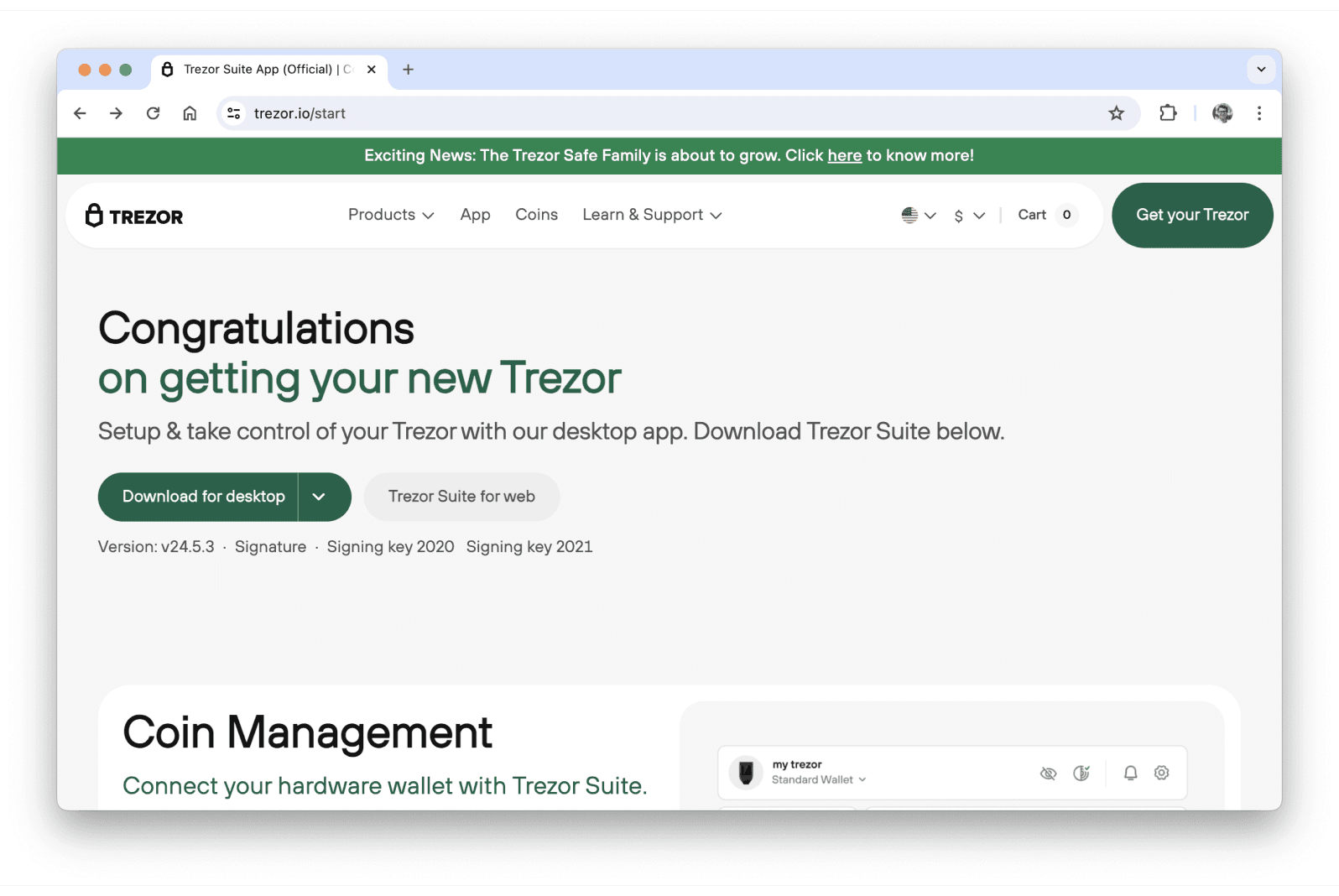
Visit trezor.io/start to download the official Trezor Suite software.
Install it on your computer (available for Windows, macOS, and Linux).
Connect your Trezor device via USB.
The Suite will recognize the device and guide you through login or setup.
4.2 Enter Your PIN
Once the device is connected, it will prompt for your PIN.
The PIN is entered using a randomized on-screen keypad, preventing keylogger attacks.
After entering the correct PIN, you gain access to your wallet.
4.3 Optional Passphrase Login
For additional security, Trezor allows a passphrase login.
The passphrase generates a hidden wallet, separate from your main wallet.
It must be entered exactly the same each time for access.
This feature is useful for users managing multiple portfolios or adding extra privacy.
4.4 Access Trezor Suite
After PIN (and optional passphrase) verification, the Trezor Suite dashboard opens.
Users can now view balances, send/receive funds, and manage assets.
No private keys leave the device during login or transactions.
5. Security Features During Trezor Login
5.1 PIN Protection
The PIN prevents unauthorized access even if the device is physically stolen.
Randomized keypad prevents malware or spyware from capturing your PIN.
5.2 Recovery Seed
A 24-word recovery seed is generated during setup.
It is the only way to restore your wallet if the device is lost or damaged.
Never store the seed digitally or share it online.
5.3 Passphrase Protection
Passphrases create additional wallets hidden from the main wallet.
Each passphrase acts as a “key” to a separate portfolio.
5.4 Firmware Verification
Trezor devices only run verified firmware.
Users are prompted to update firmware during login if needed.
This prevents malicious software from compromising your wallet.
6. Accessing Assets After Login
Once logged in via Trezor Suite:
Send Cryptocurrency: Initiate transactions safely.
Receive Funds: Generate addresses without exposing private keys.
View Portfolio: Track multiple coins and tokens.
Exchange Assets: Swap between supported cryptocurrencies using integrated exchange features.
All actions occur without private keys leaving the device, ensuring maximum security.
7. Common Trezor Login Issues
7.1 Device Not Recognized
Ensure the USB cable is functional.
Reconnect the device or try another USB port.
Restart Trezor Suite and computer if necessary.
7.2 Forgotten PIN
Too many incorrect attempts wipe the device as a security measure.
Wallet can be restored using the 24-word recovery seed.
7.3 Recovery Seed Lost
Without the recovery seed, funds cannot be restored.
Always store the seed offline in a secure location.
7.4 Passphrase Errors
Passphrase must match exactly for login.
If forgotten, the hidden wallet cannot be accessed, but the main wallet remains intact.
8. Advantages of Trezor Login
Offline Security: Private keys never leave the device.
Enhanced Authentication: PIN, passphrase, and recovery seed provide multi-layer protection.
Multi-Asset Support: Access Bitcoin, Ethereum, Litecoin, and thousands of tokens.
Recovery Options: Wallet can be restored on any compatible Trezor device using the recovery seed.
Open-Source Software: Trezor firmware is open source, allowing transparency and auditability.
9. Best Practices for Trezor Users
Keep your PIN secure and never share it.
Store the recovery seed offline in a safe and fireproof location.
Enable a passphrase for hidden wallets if managing multiple portfolios.
Keep firmware updated to the latest version.
Avoid connecting your device to untrusted computers.
10. Trezor Login vs. Software Wallets
FeatureTrezorSoftware WalletPrivate KeysOffline, never leaves deviceStored on device or cloudSecurityHigh, hardware-basedModerate, software-basedRecovery24-word seedSeed or passwordAccessPhysical device requiredPassword-only, internet accessMulti-Asset SupportThousands of coinsDepends on wallet softwareRiskPhysical theft if seed stolenSusceptible to malware/hacks
11. Who Should Use Trezor Login
Ideal users:
Long-term crypto holders prioritizing security over convenience.
Users managing multiple coins or tokens.
Individuals storing large amounts of cryptocurrency.
Not ideal for:
Users seeking instant access via mobile apps only.
Casual crypto users who trade small amounts frequently.
12. Summary
Trezor Login is a secure process that combines hardware authentication, PIN verification, and optional passphrase protection to provide maximum security for cryptocurrency assets. Key points include:
Requires physical device and PIN.
Recovery is possible via 24-word seed.
Supports multi-asset management safely.
Offers passphrase-protected hidden wallets for additional privacy.
Key Takeaways:
Trezor login ensures that private keys never leave the device.
Always store PIN and recovery seed securely offline.
Use firmware updates and optional passphrases for added security.
Trezor remains one of the most secure ways to access and manage cryptocurrency, making it ideal for users prioritizing long-term security and self-custody.